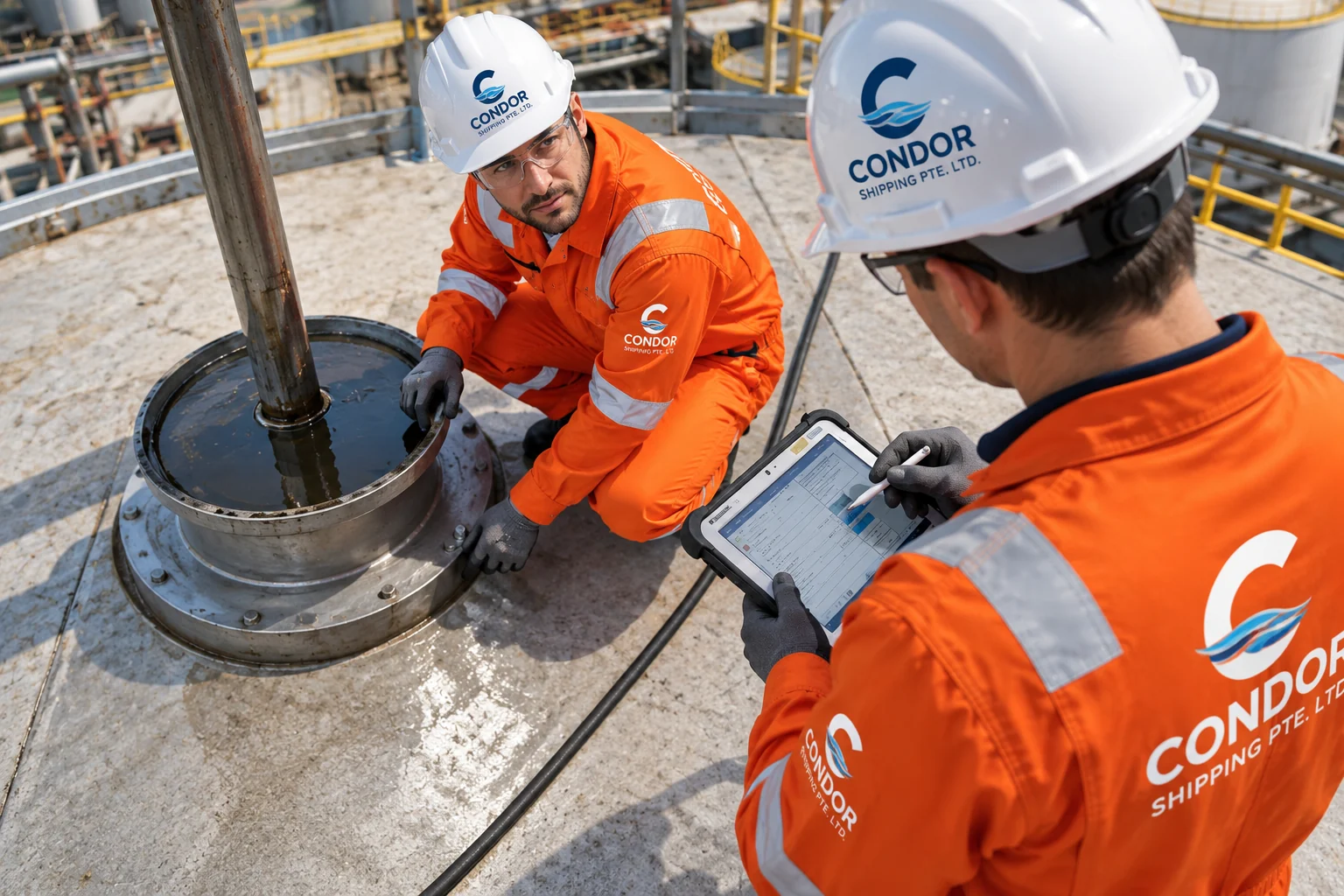

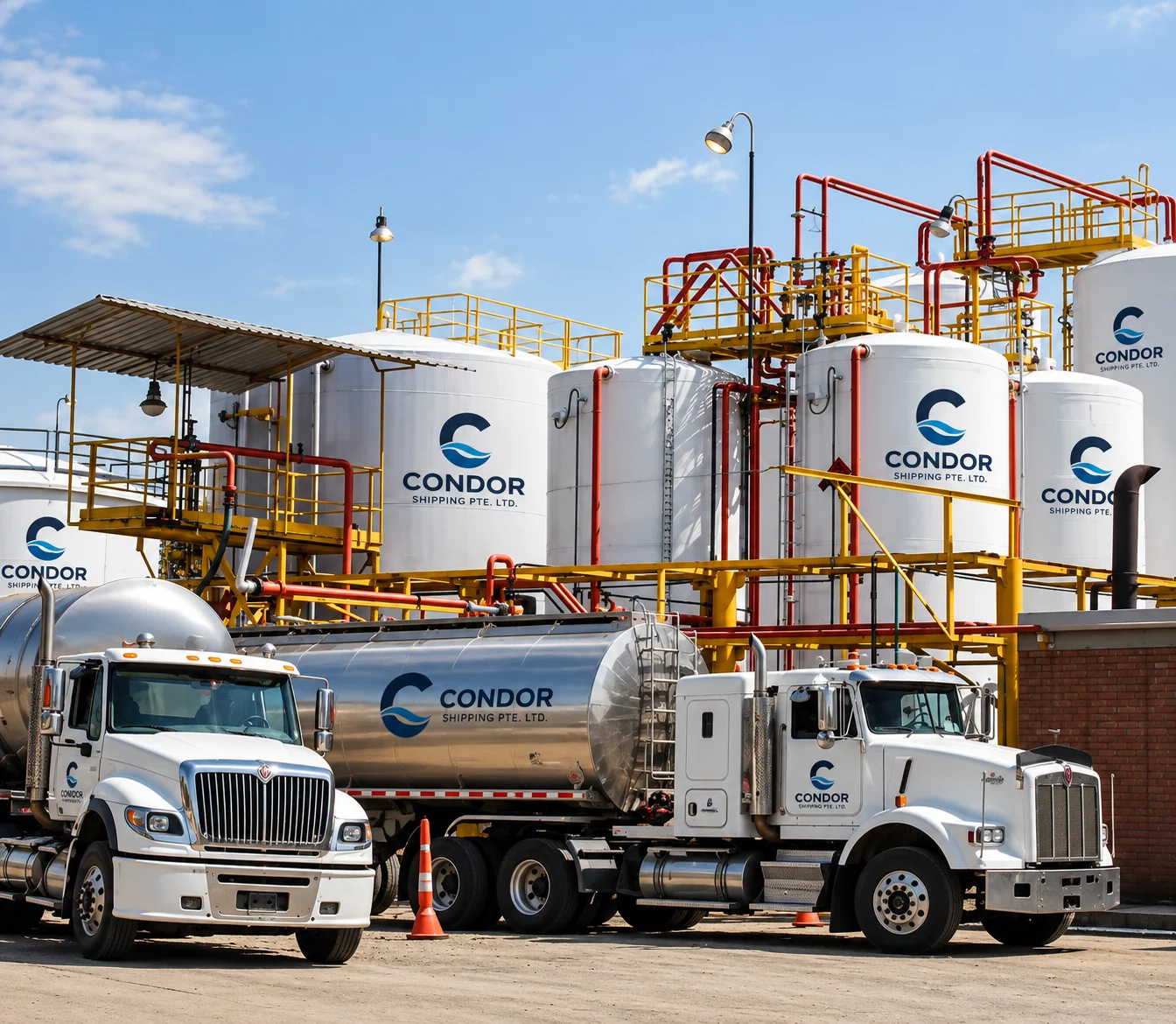
Project thinking for complex cargo movements.
From storage requirements to marine transfer plans, Condor approaches each assignment as a connected logistics project.
Project capabilities
Plan the interface before the cargo arrives.
A
Storage projects
Capacity planning, product compatibility, throughput assumptions and terminal coordination for new or recurring storage programs.
B
Vessel movements
Port windows, vessel documentation, loading/discharge planning and stakeholder coordination.
C
Transshipment projects
Structured movements between ship, shore, storage and onward transport with defined operational checkpoints.
D
Supply-chain routing
Connecting origin, storage, port and destination requirements into one operational picture.
E
Inspection programs
Planning around independent inspection, sampling, quantity/quality checks and cargo release milestones.
F
Energy-transition logistics
Preparing storage and logistics interfaces for lower-carbon fuels and emerging energy commodities.
Project sequence
A disciplined flow from enquiry to execution.
01 · ScopeProduct, quantity, origin, destination, timing and required service.
02 · FeasibilityTerminal, port, vessel and regulatory requirements are reviewed.
03 · CoordinationParties, documents, schedules and operational responsibilities are aligned.
04 · ExecutionLoading, discharge, transfer, inspection and handover are coordinated.